Skip to content

1515 116th Ave NE #205 Bellevue, WA 98005

How to Pick a Health-Friendly Office Chair

If you work in an office, it’s likely you sit all day.  You probably spend hours and hours in your chair—rarely giving thought to the chair that’s holding you up.

But if you were training for a marathon and spent hours running, wouldn’t you buy good
running shoes?

Choosing an office chair can make the difference between coming home exhausted and in pain, and coming home invigorated.  Here’s what to look for in a good chair.

  • Chair Shape:  Choose a chair that follows the contour of your spine—especially if you are shorter or taller than average.
  • Lumbar Support:  Test the lumbar support to make sure it fits snug against your lumbar, giving support to prevent slouching or tension.
  • Arm rests:  Look for adjustable arm rests that adjust up and down as well as in and out for different body widths.  Align the arm rests so that they support the weight of your arms when your arms extend down naturally from your shoulders.
  • Adjustable seat height:  Adjust the seat height so that your arms extend to your desk at 90° angles.  Depending on your leg length, you may need a foot rest to support your legs so that your thighs are parallel to the ground.
  • Seat length:  Sit on the chair with your bottom against the back of the chair.  The seat length should be 2-3 finger lengths between the end of the chair and the inside of your knee.
  • Seat cushion:  Make sure the seat is comfortable.

Once you have your seat adjusted for good body posture, you’re ready for the final step for healthy office posture.

Raise your computer screen so you can see it with your head in a neutral position.  This usually means that your keyboard must be separate from the screen.  If you use a laptop, put the laptop on a stand and use a separate keyboard on your desk when typing.


Pain Reducing Desk Stretches

A regular routine of stretching will relieve aches and pains and help prevent office injuries.

  1. Start with a simple head roll—head forward, to the side, back, to the other side and back forward again.  The slower the better.  Reverse.
  2. Shrug your shoulders and roll them forward and backward.
  3. Reach up and then back, touching your back with your right hand as far below your neck as you can.  Use your left hand to gently push your right elbow farther behind your head.  Repeat on the other side.
  4. Clasp your hands and turn them so your palms extend in front of you.  Extend your arms forward and then above your head.
  5. Extend your right arm in front of you, with the fingers pointing up and palm forward.  Use your left hand to gently pull the fingers toward your body.  Repeat on the other side.
  6. Cross your right leg over your left one.  Twist to the right, using your left arm for leverage against your right knee.  Repeat on the other side.
  7. Sit on the edge of your chair, legs extended in front of you (make sure the chair is secure if it has wheels).  Gently reach for your toes.  If you have back issues, use your desk or a wall to support your body weight as you gently reach forward.  Hold and breathe for 10 seconds.
  8. Walk around.  Find reasons to make small trips away from your desk.  Any movement is better than no movement.
Posted in | Comments Off on How to Pick a Health-Friendly Office Chair

Helping Teens Beat School Stress

With the start of the school season, many teenagers are again feeling the increased effects of stress.  And while adults have many resources to help with stress, teenagers have few.  Their stress is high, but their ability to cope is low.

Many schools are recognizing this and taking steps to help their students.  Some schools have yoga programs or use therapy dogs.  Some teach Transcendental Meditation or Mindfulness Training.  More and more schools understand that teaching stress management is an important part of preparing teenagers for life.

If you have access to classes that help with stress, consider offering them to your teen.  But even without classes, there’s a lot you can do to help your stressed teen.

Points Towards Health

Three Mile Point (ST 36)

Location: Four finger widths below the kneecap, one finger width to the outside of the shinbone. If you are on the correct spot, a muscle should flex as you move your foot up and down.

Function: Strengthens the whole body, especially the immune system; tones the muscles and aids digestion as well as relieves fatigue.

three-mile-point

Watch for signs of stress.  Fatigue, headache, feeling sick, mood swings, changes in sleep or eating patterns, a drop in grades or difficulties in relationships can all be signs of stress.  Address stress before it is a serious problem.

Be available.  Even if you are busy, make time to spend with your teen—especially the times your teen is most likely to open up (bedtime, driving, etc.)

Soften your reactions.  Teenagers are very sensitive.  Express your opinions without judgment or argument.

Listen and translate.  Sometimes teenagers can’t accurately describe how they are feeling.  Sometimes “no one likes me” or “I’m stupid” means “I’m stressed and worried.”  Help them identify feelings of stress so they know how to care for themselves.

Listen and illuminate.  Sometimes teenagers lump feelings into a big pot and draw grandiose conclusions.  “My teacher hates me” can mean that the teacher was just grouchy.  Help your teenager separate real events from imaginary ones, real conflicts from misunderstandings.

Stop rushing.  Remember that you may be hearing only part of the story.  It may take time for a teen to relax enough to speak openly.  Be available for long conversations.

Facilitate support from friends.  Encourage your teenager to spend time with supportive friends and family.

Teach self-care.  Encourage your teen to exercise and eat well.  As challenging as it may be, talk about the benefits of a full night’s sleep.  Point out that it feels good to feel good.

Teach time management.  Teens are not likely to ask for help managing their busy schedules, but sometimes they need it.  Encourage them to think of ways to complete their work without stress.

Ask your teen what they need.  Do they need advice or just someone to listen?  Do they need strategies or loving support or active intervention?  Allow your teen to identify what would
be helpful.

Stop being helpful.  Sometimes extra advice, strategies or tips just give the teen more things to worry about.  Remind the teen that they are doing great.

Allow alone time.  Sometimes being alone, watching YouTube or playing computer games is a way for teens to unwind.  Understand that they need to relax, even if you don’t enjoy the activity.

Posted in | Comments Off on Helping Teens Beat School Stress

What Are Your Acupuncture Questions?

hand-acuQuestions?  Comments?  Concerns?

Normally I use this blog to tell you a little about my favorite topics, Traditional Chinese Medicine (TCM), acupuncture and natural health.  But today I want to do something different.

I want to learn more about you.

Today I want to know what your concerns and questions are.

Ask me anything, basic or complicated.  Ask about TCM, acupuncture or general health.  Ask about injuries, illness or disease.  Whatever is on your mind, ask the question.

Contact me here, and I’ll reply to your questions as soon as I can.

Posted in Acupuncture | Tagged , | Comments Off on What Are Your Acupuncture Questions?

The Secrets of Acupuncture for Children: Getting Kids to Love Acupuncture Needles

family-acupunctureAcupuncture is great for children.

Children are very responsive to the acupuncture needles and often show great improvement after a treatment.   Acupuncture is fantastic for many childhood illnesses like coughs, fevers, ear infections, bed wetting, digestive issues, colic, allergies, ADD and ADHD.  And more and more research proves that acupuncture is safe for kids.

But many parents worry that their kids will hate the needles.  They want to avoid a treatment that is traumatic and difficult.

How do you give a child a treatment which they may not like?

The answer is that you do it kid style. continue reading »

Posted in Acupuncture | Tagged , | Comments Off on The Secrets of Acupuncture for Children: Getting Kids to Love Acupuncture Needles

More than Needles: 3 Traditional Chinese Medicine Therapies You Can Do at Home

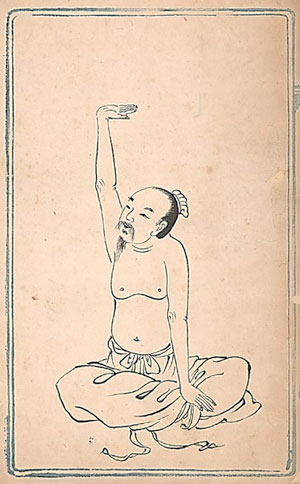
Baduanjin_qigong_smIf you asked the average person how Traditional Chinese Medicine (TCM) keeps you healthy, they would probably answer that it uses acupuncture needles.

That is a good start.

TCM is a complex understanding of how Qi, or life force, affects your health.  Qi flows through meridians passing through points which can be used to regulate and control that flow.  When the flow of Qi increases, decreases or its quality changes, your health is affected.  The most common way to manage the flow of Qi is with acupuncture needles.

But TCM is much more than needles.

In the second part of our two-part series “More than Needles,” you will learn three ways to keep yourself healthy using Traditional Chinese Medicine principles at home.  By using these techniques in your daily life, you will be in charge of your health. continue reading »

Posted in Acupuncture, Nutrition, Wellness | Tagged , , , , | Comments Off on More than Needles: 3 Traditional Chinese Medicine Therapies You Can Do at Home
206-618-6549 Directions Contact/Schedule

We've Moved!

1515  116th Ave NE #205
Bellevue, WA 98005

Accepting New Patients Starting January 9th, 2024